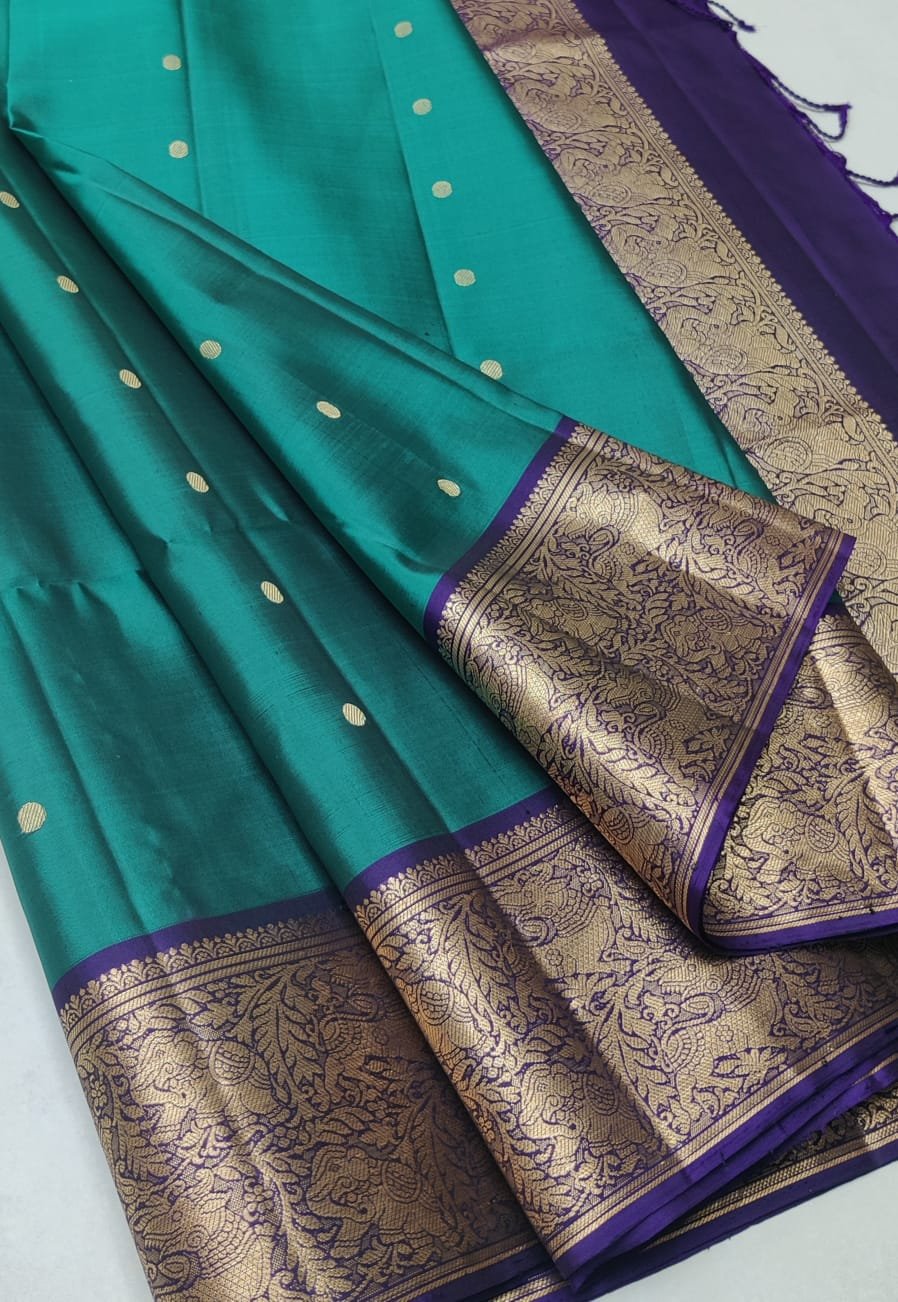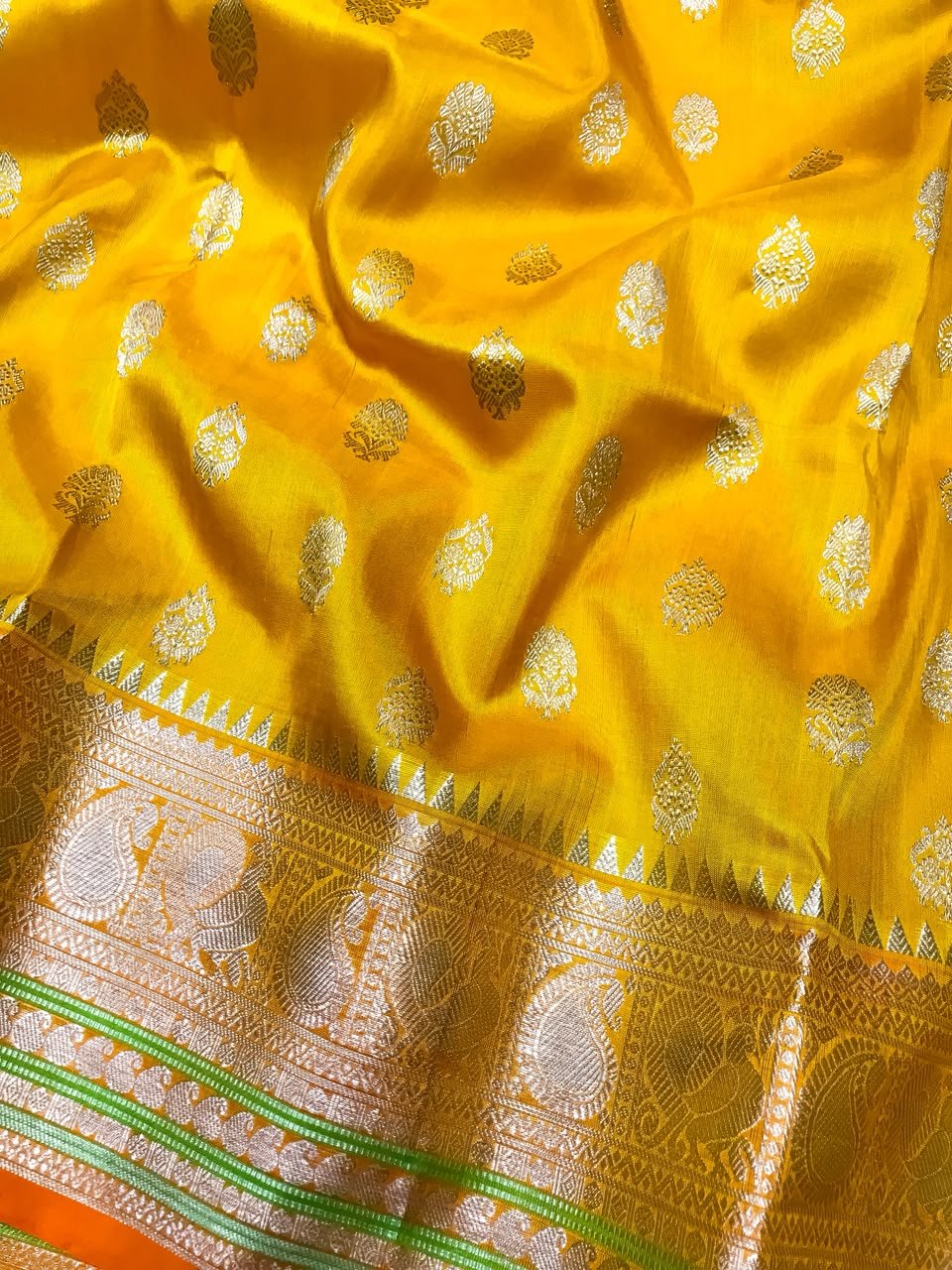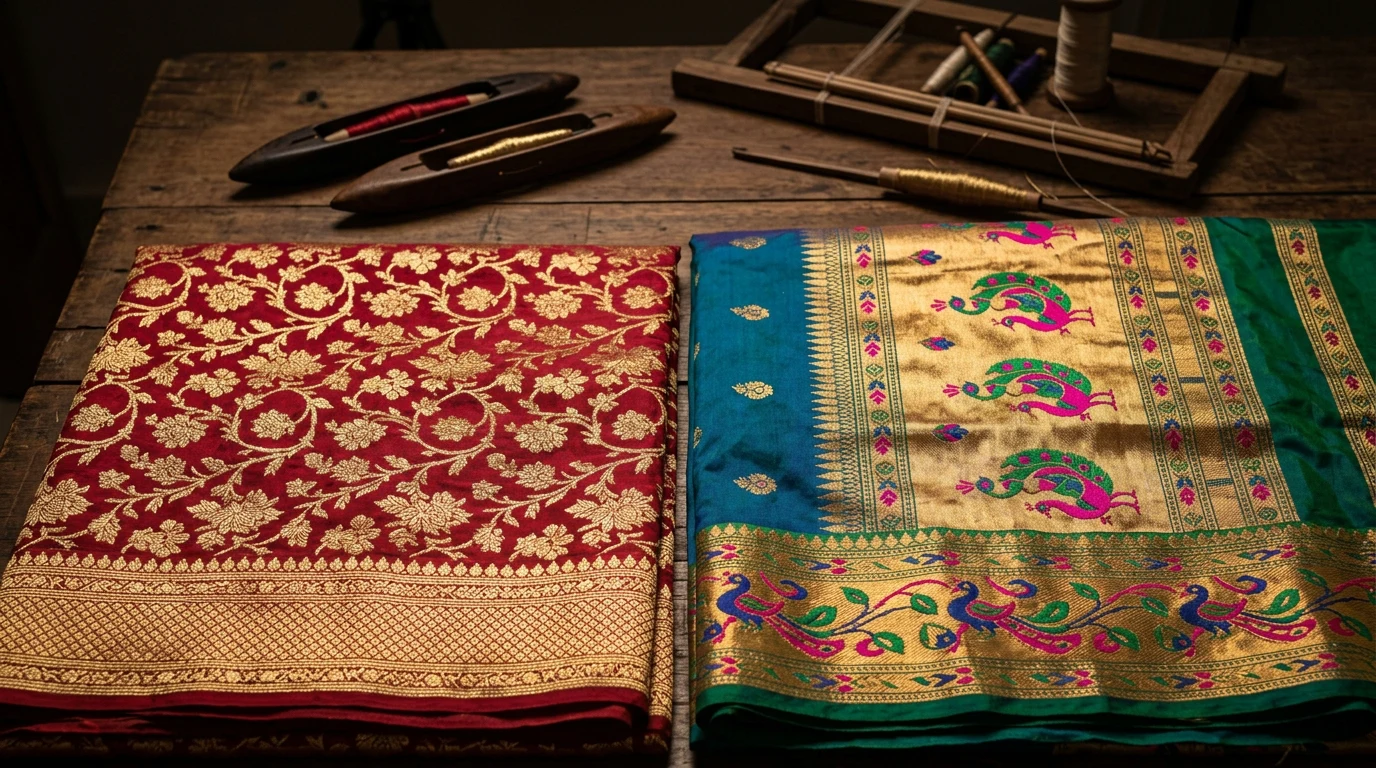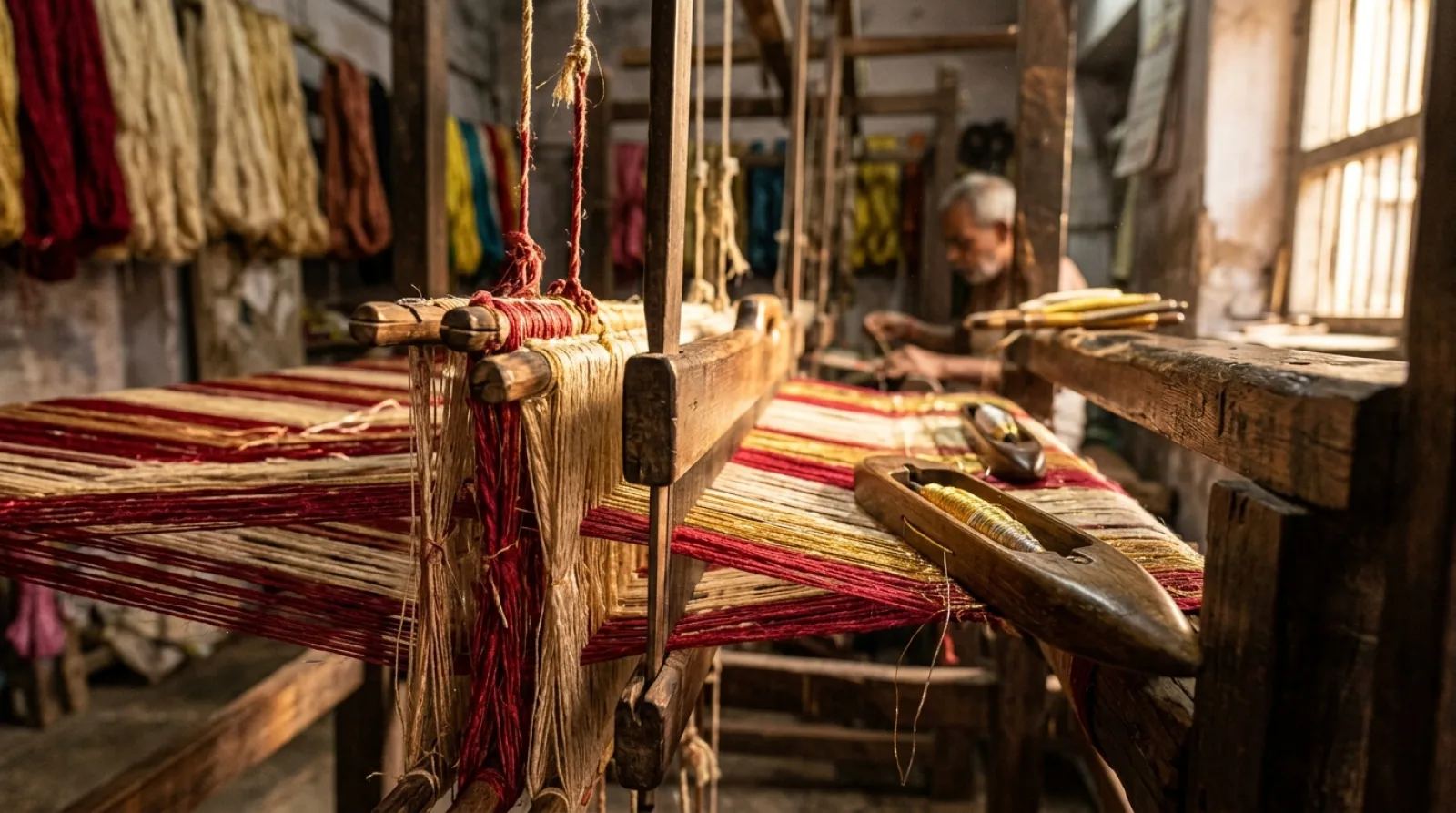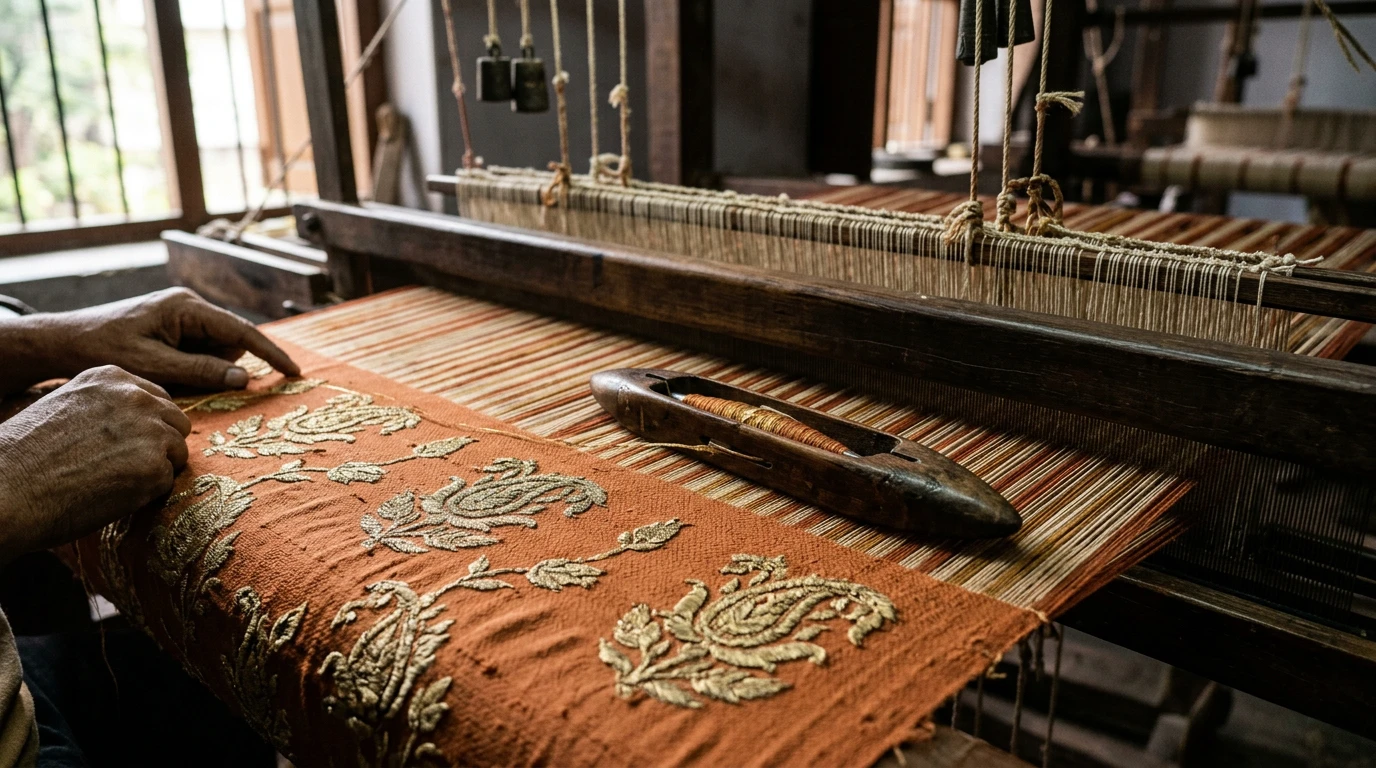
A genuine Tussar Georgette Banarasi saree is a master-woven handloom marvel marrying a high-twist mulberry silk warp with an organic, textured wild Tussar silk weft on a Varanasi pit loom. Renowned for its matte slub grain, feather-light breathability, and zero-slip drape, this artisanal weave has achieved cult status among modern brides and collectors seeking royal Banarasi heritage without the burdensome 1.2-kilogram heft of stiff vintage brocades.
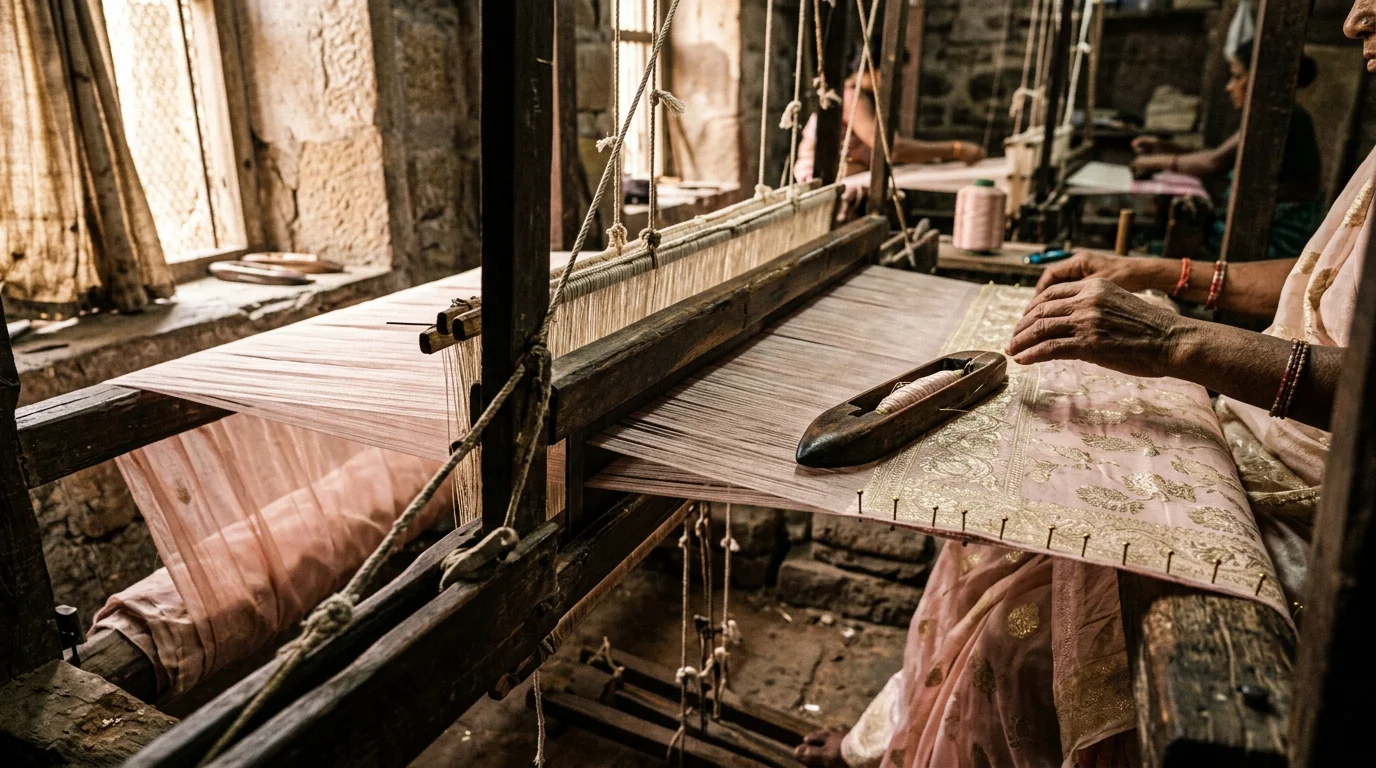
Walk through the ancient weaving galis of Madanpura, Peeli Kothi, and Lallapura at dawn, and you will hear a distinct rhythmic cadence from the pit looms. Unlike the deafening mechanical roar of automated powerloom sheds, the handloom artisan works in steady, meditative strokes. Here, over the course of three to four grueling weeks, a single warp of high-twist crepe silk is interlaced with wild forest-reeled Tussar yarn to birth one of the most tactile textiles in Indian handloom history.
For generations, bridal trousseaus were dominated almost exclusively by heavyweight Katan silk. Yet today, luxury connoisseurs, destination wedding brides, and seasoned sari collectors are gravitating toward this textured enigma. To understand why this weave has captured the contemporary imagination, one must look deep into the warp, the weft, and the centuries-old mechanics of the Varanasi pit loom.
Pure Handloom Tussar Georgette
Weft: Wild Reeled Tussar (Slub Grain)
The Anatomy of the Weave: How Wild Silk Meets High-Twist Crepe
At its structural heart, Tussar Georgette is a deliberate textile contradiction engineered by master weavers. Standard Banarasi georgette (frequently referred to locally as Khaddi Georgette) is crafted entirely from cultivated mulberry silk filaments twisted into high-energy S-twist and Z-twist yarns. When washed and degummed, these twisted threads contract sharply, creating georgette’s signature pebble-textured, spring-like elasticity.
In contrast, wild Tussar silk (derived from the wild forest moth Antheraea mylitta) possesses a naturally uneven, coarse, honey-gold filament rich in microscopic air cavities. When Varanasi weavers blend these two elements—loading the pit loom's warp (Tana) with resilient high-twist mulberry crepe and firing wild Tussar threads through the weft (Bana)—they achieve a revolutionary tactile surface.
The resulting textile has an organic, matte slub grain that completely eliminates the artificial slipperiness associated with synthetic georgettes. It behaves like liquid sculpture: it falls close to the contours of the body without clinging, offering unmatched thermal breathability that keeps the wearer cool in humid ballrooms and warm during evening pheras.
"On an authentic pit loom, the weaver’s feet rest inside an excavated earthen pit beneath the floorboards. The natural underground humidity softens the tension of the wild Tussar filaments, preventing brittle snaps that commonly occur on dry powerlooms. That subterranean moisture is why a handloom Tussar Georgette has that distinctive buttery yet textured bounce."
Why Modern Brides & Connoisseurs Prefer Tussar Georgette Over Katan Silk
For over two centuries, the heavyweight Katan silk Banarasi stood as the undisputed empress of bridal grandeur. Yet behind closed doors, brides frequently wrestled with its reality: weighing anywhere from 900 to 1,400 grams, stiff Katan requires industrial strength safety pins, restricts easy movement, and can feel stifling during long 4-hour indoor rituals.
The sudden surge in cult popularity for Tussar Georgette represents a profound philosophical shift in how luxury is experienced:
- The 550-Gram Featherweight Advantage: A full bridal Tussar Georgette saree weighs approximately 500g to 650g—under half the weight of traditional brocade. You can dance through a Sangeet, stand through endless photo lines, and sit through hours of wedding rites without spinal fatigue.
- Zero-Slip Drape Friction: Satin and chiffon sarees slip constantly, requiring constant adjustment. The micro-pebble, slub-textured surface of Tussar Georgette creates natural mechanical friction against itself. Once your pleats are tucked at 7:00 PM, they remain razor-sharp and locked until dawn.
- The "Understated Luxe" Matte Aesthetic: Blinding, mirror-finish polyester sheens look dated under modern high-definition photography. Tussar Georgette absorbs harsh flash photography softly, casting a warm, candlelit matte luminescence that highlights the handwoven antique gold zari motifs.
- Unequaled Dye Receptivity: Wild Tussar yarn contains natural tannins that absorb hand-dyes with artisanal gradation. This creates rich, moody, artisanal color palettes—burnt turmeric, sage moss, terracotta, crushed mulberry, and vintage champagne—that flat chemical dyes on powerlooms can never replicate.
Loom Comparison: Pure Pit-Loom Handloom vs. Machine Replicas
Due to explosive consumer demand, industrial powerlooms in Surat and mechanized workshops outside Varanasi have flooded the market with imitation "Tussar Georgette" sarees. These replicas replace natural silk with chemical viscose or polyester filaments, weaving the motifs using mechanical cutwork.
Understanding these structural differences ensures you never mistake a ₹3,500 synthetic machine drape for a certified handloom heirloom:
| Technical Parameter | Pure Handloom Kadhua (Sutvani) | Semi-Viscose Blend | Powerloom Machine Replica |
|---|---|---|---|
| Fiber Composition | 100% Pure Mulberry Silk (Warp) + Wild Tussar (Weft) | Mulberry Warp + Viscose / Modal Rayon Weft | 100% Polyester / Synthetic Nylon Crepe |
| Weave Mechanism | Varanasi Wooden Pit Loom (Gaddha Loom) | Semi-Automated Jacquard Loom | High-Speed Automated Powerloom |
| Motif Weaving Art | Kadhua / Kadwa: Hand-locked motifs, zero floats | Fekwa / Semi-cutwork with trimmed floats | Continuous cutwork with sheared, itchy float bristles |
| Loom Production Time | 18 to 35 working days per saree | 3 to 5 days | 4 to 6 hours per saree |
| Reverse Side Hand-Feel | Smooth as velvet; motifs are flush with fabric | Moderate float friction on reverse | Harsh, prickly whiskers that catch on fine jewelry |
| Outer Border (Selvage) | Organic tension pinholes (Kanji marks) | Uniform machine selvage | Laser-cut, heat-sealed, or glued edges |
| Silk Mark Certification | 100% Eligible (Central Silk Board QR Coded) | Strictly Ineligible (Blended yarns) | Illegal if labeled as pure silk |
| Honest Price Range (INR) | ₹18,500 – ₹45,000+ | ₹6,000 – ₹11,500 | ₹2,400 – ₹4,800 |
The 4-Step Master Weaver Inspection Checklist
Before finalizing any purchase or investing in a Tussar Georgette Banarasi saree, perform these four physical inspection tests. Any authentic handloom weaver will gladly permit you to carry out these non-destructive examinations:
The Reverse-Side Kadhua Inspection
Flip the saree over to inspect the back of a large floral buta or paisley motif. In an authentic Kadhua (Kadwa) weave, each motif is woven individually using dedicated miniature spools called tilis. When the motif ends, the artisan locks the zari thread into the warp. There should be zero connecting threads spanning between adjacent motifs. If you observe a dense carpet of clipped thread ends that resemble a prickly 5 o'clock shadow, you are looking at a machine-sheared cutwork replica.
The Loom Selvage & "Kanji" Pin-Mark Test
Examine the plain edge along the borders of the saree (the selvage). Varanasi pit looms use wooden tenter hooks fitted with tiny metal pins—locally known as kanji—to maintain lateral tension across the wide fabric while the weaver beats the reed. These leave subtle, organically spaced pin-pricks every few inches along the edge. Industrial powerlooms use mechanical tension rollers that leave a sterile, mechanically uniform border with zero pinholes.
The Dual Warp & Weft Thread Burn Test
Gently tease out one vertical thread (warp) and one horizontal thread (weft) from the unstitched fringe near the pallu. Ignite them separately with a flame. Pure mulberry and wild Tussar silk are protein fibers (fibroin): they burn slowly, smell distinctly of singed hair or burnt feathers, self-extinguish the moment the flame is removed, and leave a soft, crushable black ash. If the thread smells like burning paper or celery and leaves grey flaky ash, it is viscose rayon. If it curls into an uncrushable hard plastic bead, it is synthetic polyester.
The Zari Core & Silver Oxidation Check
Unravel a tiny strand of the metallic zari thread. Authentic Banarasi handlooms utilize tested zari or pure silver zari, where an inner core of natural silk yarn is tightly wrapped with genuine electroplated silver-gilt ribbon. If the inner core thread is pure white or yellow silk, it represents heirloom handloom grade. If the core thread is cheap white polyester or nylon filament coated with metallic plastic foil (lurex), it will burn into a foul-smelling plastic blob.
Real-World Market Pricing: What Should You Expect to Pay in INR?
Pricing skepticism is natural when shopping for Banarasi handlooms online. Because synthetic powerloom sarees are marketed with identical stock photos, prices range wildly from ₹2,500 to ₹60,000.
Here is an honest breakdown of the genuine cost structure based on artisan labor, yarn grade, and loom days in Varanasi:
-
Entry-Level Handloom Tussar Georgette (Fekwa Weave) ₹16,500 – ₹22,000
Woven on pit looms using light all-over floral butis with tested antique zari. The motifs feature minimal reverse floats carefully hand-trimmed at the loom.
-
Masterwork Pure Kadhua Tussar Georgette ₹24,000 – ₹38,500
Every single paisley, floral leaf, or architectural motif is individually hand-locked. Takes 22 to 35 uninterrupted days of artisan labor. 100% Silk Mark certified.
-
Heirloom Pure Silver Zari / Raktambari Jangla ₹42,000 – ₹68,000+
Museum-grade bridal masterworks featuring certified pure silver zari electroplated in 24kt gold, woven in intricate Shikargah or floral Jangla jaals across the entire 6.5-meter canvas.
Experience Authentic Tussar Georgette
Every Sutvani Tussar Georgette saree is handwoven in our master-weaver karkhanas in Varanasi, carrying the official QR-coded Silk Mark India tag and zero-float Kadhua craftsmanship.
Frequently Asked Questions
What is a Tussar Georgette Banarasi saree?
A Tussar Georgette Banarasi saree is an artisanal handloom textile marrying a high-twist mulberry silk warp with a wild Tussar silk weft on a Varanasi pit loom. It unites the bouncy, lightweight breathability of georgette with the organic slub texture and matte royal grandeur of natural wild silk.
Why is Tussar Georgette preferred over traditional Katan silk by modern brides?
Contemporary brides choose Tussar Georgette because it weighs only 500g to 650g—less than half the weight of heavy 1.2kg Katan silk brocades. Its granular micro-pebble surface provides natural tactile friction, keeping pleats crisp and locked in place for 14+ hours without slipping or requiring excess safety pins.
How can you tell handloom Kadhua Tussar Georgette from powerloom cutwork?
Inspect the reverse side of the floral motifs. Genuine handloom Kadhua motifs are individually hand-locked by the artisan with zero trailing threads or loose floats on the back. Powerloom replicas feature mechanical cutwork with prickly, sheared thread bristles that scratch against sensitive skin.
What is the authentic price of a handloom Tussar Georgette Banarasi saree?
An authentic handloom pure Tussar Georgette saree woven on a Varanasi pit loom with certified tested zari ranges from ₹18,500 to ₹38,000. Masterwork designs with pure silver electroplated zari or intricate antique Kadwa jaals command ₹42,000 to ₹68,000. In contrast, synthetic polyester or semi-viscose machine copies sell between ₹2,800 and ₹7,500.
What is the correct HSN code and GST rate for pure Tussar Georgette sarees?
Pure handloom Tussar Georgette silk sarees containing 85% or more natural silk fall under HSN code 5007 20 10 and attract a standard 5% GST in India. Blended semi-viscose variants are classified under HSN code 5408, while synthetic polyester drapes fall under HSN code 5407.