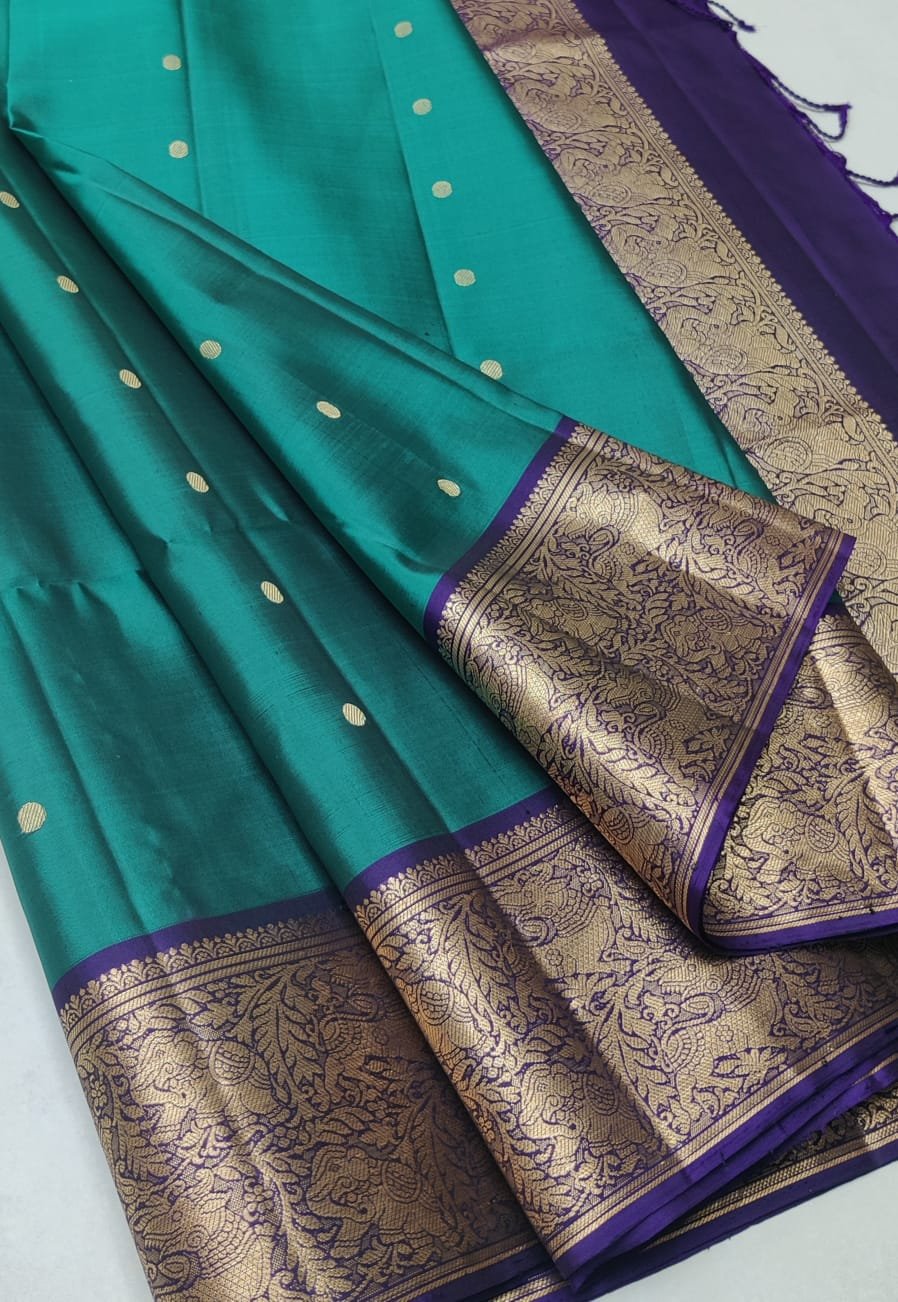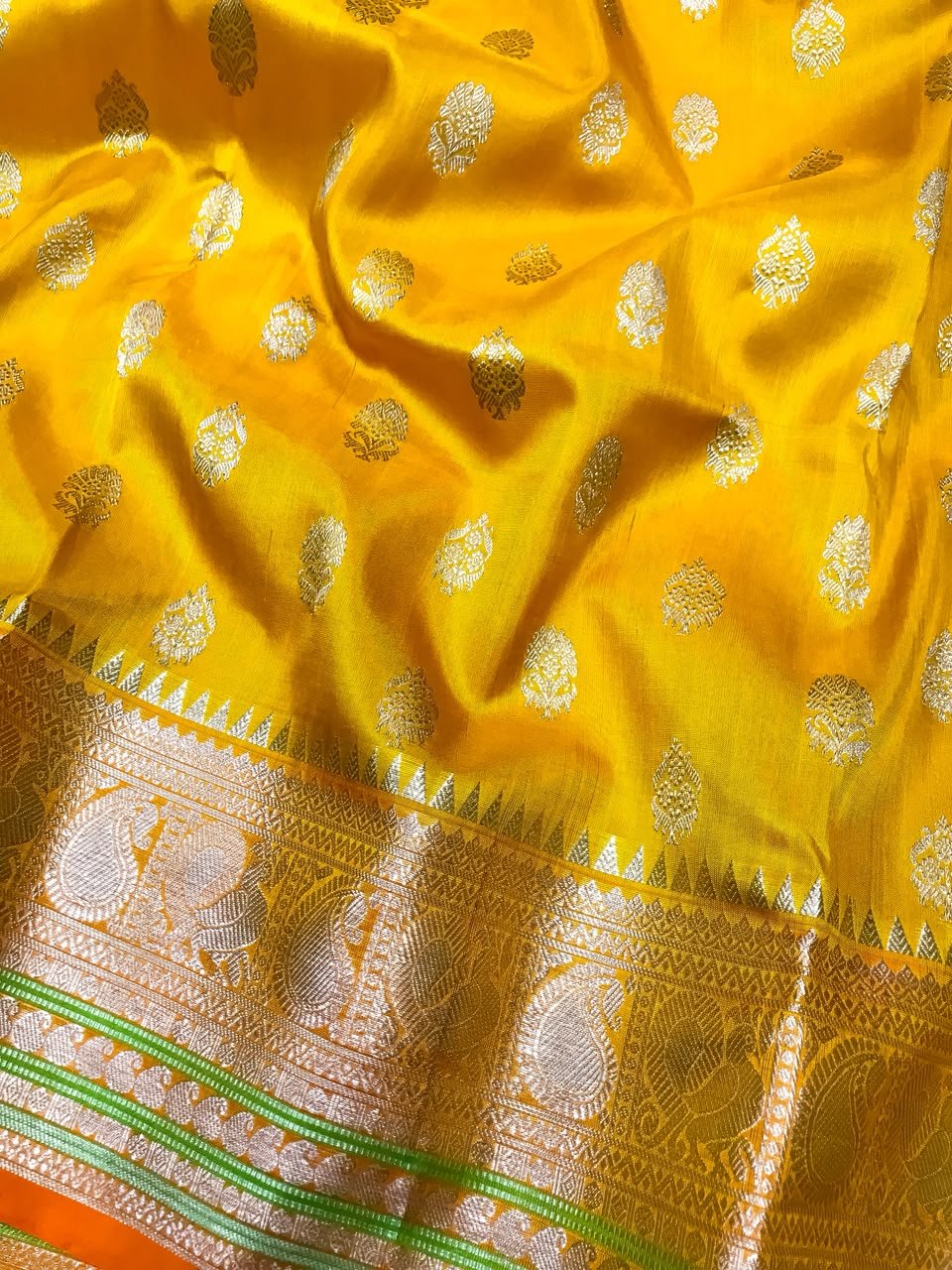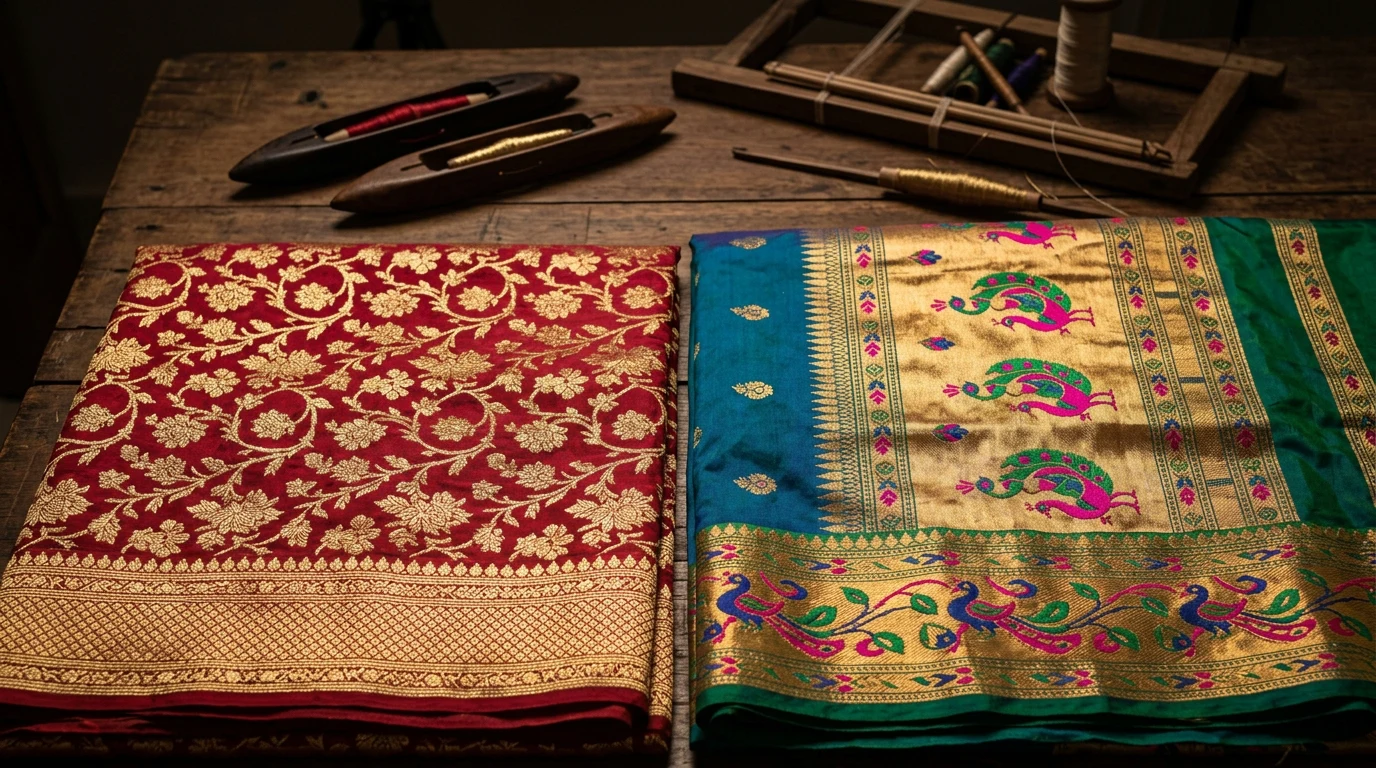
The fundamental difference between a Banarasi and a Paithani saree lies in their weaving architecture, yarn structure, and royal lineage: Varanasi’s Banarasi features pure mulberry Katan silk with raised supplementary-weft metallic brocade (Kadhua or Fekwa), whereas Maharashtra’s Paithani is characterized by an unbacked tapestry-weave gold tissue pallu and enameled interlocking weft motifs. While the Banarasi drape commands attention through dense architectural brocades and heavy Katan silks, the Paithani mesmerizes through fluid, luminous dhoop-chhaon (dual-tone) iridescence. Choosing between these two legendary handlooms ultimately depends on whether your bridal trousseau calls for majestic North Indian Mughal-Vedic grandeur or intimate Maratha Peshwa heritage.
For over two millennia, the handloom corridors of India have revered Varanasi and Paithan as the twin epicenters of royal ceremonial textiles. While Varanasi’s master weavers engineered multi-layered jacquard and pit-loom brocading for Mughal courts and royal durbaars, Paithani’s weavers flourished under the patronage of the Satavahana dynasty and later the Maratha Peshwas. Both sarees carry prestigious Geographical Indication (GI) tags and stand as supreme investments in Indian handloom culture.
Banarasi Katan vs Paithani Tapestry
Paithani: Interlocking weft tapestry (Kadiyal / Dhaap)
Paithani: Filature un-degummed / soft-twist mulberry silk
Paithani: 700g – 950g (Supple, fluid drape)
Loom Mechanics: Supplementary Weft Brocade vs. Interlocking Tapestry
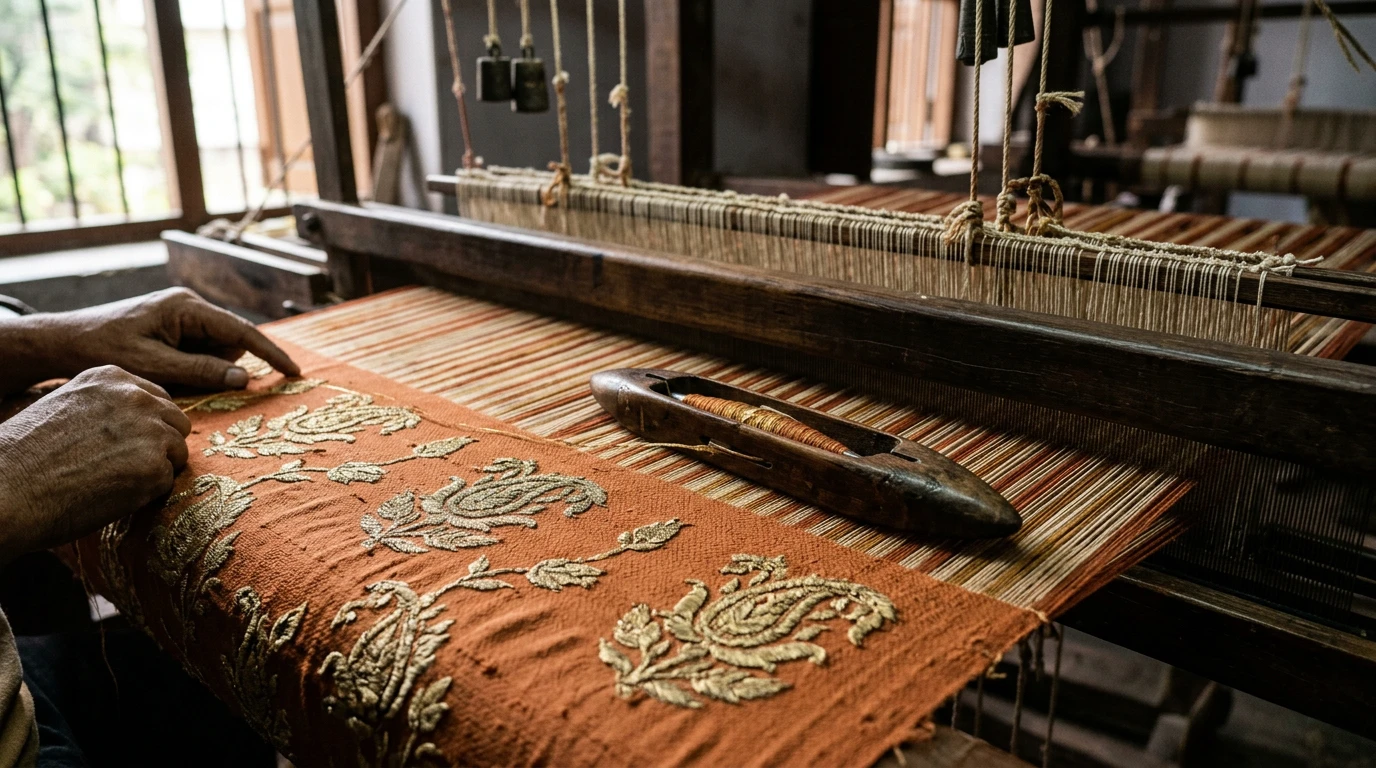
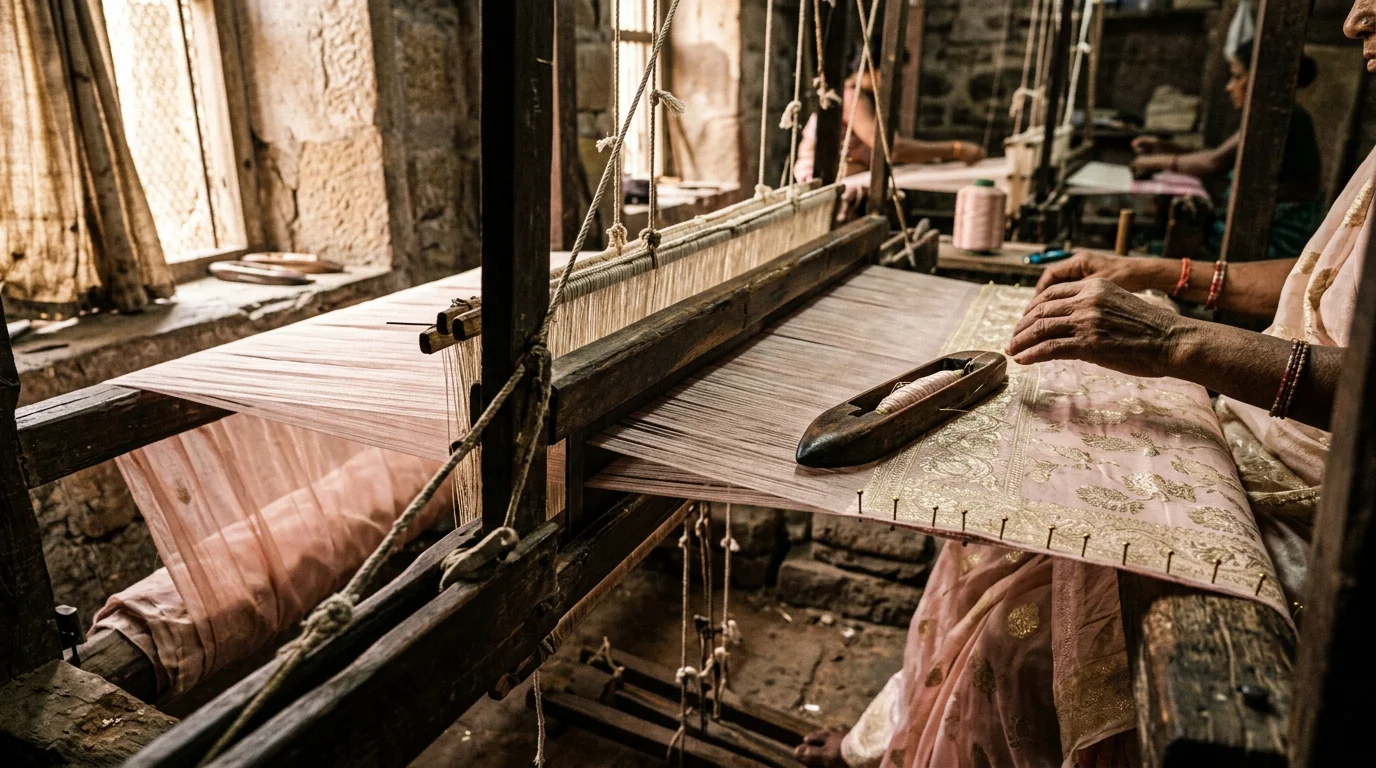
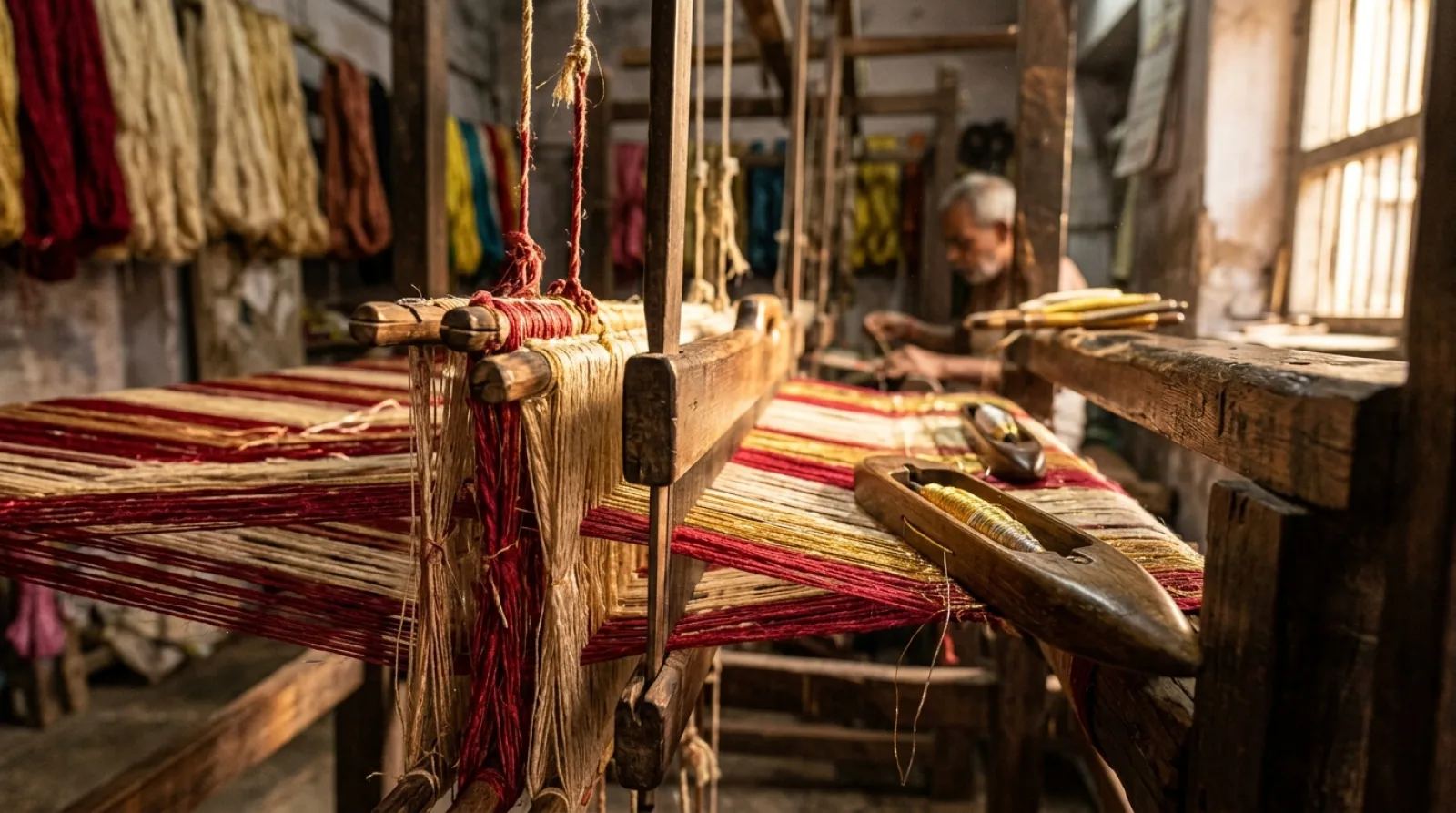
To truly understand the tactile differences between these two royal drapes, one must examine the weaver's physical loom interface. In Varanasi's ancient weaving clusters of Madanpura, Chowk, and Peeli Kothi, artisans operate deep pit looms utilizing supplementary-weft shuttles. In traditional Kadhua (Kadwa) weaving, each floral motif is individually engraved into the base fabric with separate miniature shuttles, locking each edge securely without a single trailing thread across the back.
Conversely, on the banks of the Godavari in Paithan and the bustling workshops of Yeola, the loom mechanics follow an ancient Persian-influenced tapestry technique. Rather than throwing a continuous shuttle across the warp, the master weaver uses multiple tiny wooden spools called tilas or sarus to interlock colored silk threads directly into the gold zari base. This interlocking weft method produces a design that appears completely identical on both the front and reverse sides.
Because Paithani motifs are inlaid stitch-by-stitch without cutting extra threads, weaving an authentic six-yard masterpiece requires unprecedented patience. A single bridal Paithani pallu featuring intricate peacocks can occupy two weavers sitting shoulder-to-shoulder for up to eight months. Meanwhile, a complex Banarasi Shikargah or antique Jangla pit-loom weave demands equal virtuosity, translating intricate courtly hunt scenes into dense metallic filigree.
"On a Varanasi pit loom, the weaver controls supplementary warp tension using subterranean foot treadles, creating raised, embossed gold zari motifs. In Paithan, the weaver acts like a carpet tapestry artisan, manually looping and interlocking different weft colors across the warp using wooden beaters (dhaap). Both techniques completely avoid the cutwork float threads found in modern machine replicas."
The Definitive Head-to-Head Comparison Table
Navigating the luxury bridal silk market requires sharp technical discernment to separate genuine handlooms from mechanical powerloom replicas. The comparative matrix below details yarn counts, weave structures, production cycles, and authenticity indicators for both handloom lineages alongside mass-market counterfeits.
| Parameter | Pure Handloom Banarasi | Pure Handloom Paithani | Powerloom Replica (Machine) |
|---|---|---|---|
| Geographic Origin | Varanasi (Madanpura, Chowk, Peeli Kothi, Sarai Mohana) | Maharashtra (Paithan on Godavari & Yeola in Nashik) | Surat, Ahmedabad, or decentralized powerloom clusters |
| Yarn Composition | 100% Pure Mulberry Katan Silk (High-twist, 2-ply 20/22 denier) | 100% Pure Filature Mulberry Silk (Soft-twist or un-degummed) | Synthetic polyester, art silk, or viscose filament blends |
| Weave Technique | Pit Loom with Kadhua (locked extra-weft) or Fekwa shuttle | Throw-shuttle Pit Loom with Interlocking Weft Tapestry | Automated computerized Jacquard with mechanical cutwork |
| Reverse Side Inspection | Completely clean, hand-locked stitches without loose floats | Near-mirror image of front side; seamless tapestry stitches | Fringed, scratchy cut float threads across every motif |
| Loom Production Time | 25 days to 6 months depending on jaal density | 30 days to 18 months for intricate Maharani tissue pallus | 4 to 6 hours per saree on automated high-speed looms |
| Signature Border Style | Jhallar fringe, floral bel, temple spires, or geometric chevrons | Narali (coconut flower) border or broad slanted Munia bands | Stiff, flat computerized borders with laser-trimmed edges |
| Authentic Price Benchmark | ₹22,000 – ₹1,50,000+ (Master Kadhua/Real Zari) | ₹25,000 – ₹2,50,000+ (Yeola / Pure Paithan Handloom) | ₹2,200 – ₹7,500 (Surat Jacquard / Synthetic Art Silk) |
Iconography & Motifs: Mughal Durbaar Courtliness vs. Peshwa Naturalism
The ornamental visual lexicon of a saree mirrors the cultural soil from which it sprouted. Varanasi’s design vernacular is deeply syncretic, uniting ancient Vedic iconography with Persian courtly naturalism from the Mughal era. Signature Banarasi motifs include the sweeping Kalka (paisley or mango), all-over floral vines known as Jangla, and the celebrated Shikargah, which weaves royal galloping stags, elephants, and tigers into intricate forest canopies.
In sharp contrast, the design repertoire of the Paithani is rooted in Maharashtra's spiritual nature and ancient Ajanta cave frescoes. Its most coveted signature is the Bangadi Mor (a regal peacock enclosed within a sacred bangle or crest), followed by Munia (sacred parrots aligned along the borders) and Asawali (flowering vines symbolizing prosperity). The border almost always features the sacred Narali (coconut) motif, woven in sharp geometric triangles that symbolize divine auspiciousness.
Another mesmerizing characteristic unique to Paithani is its radiant dhoop-chhaon (sunshine-and-shade) optical phenomenon. By dressing the warp in one luminous shade (such as royal ruby red) and firing the weft in a contrasting hue (such as peacock green or golden yellow), the saree shifts color dynamically as the wearer moves. While Banarasi can also feature two-tone shot silks, Paithani achieves a soft, incandescent glow that feels completely organic.
Drape, Weight, and Bridal Trousseau Architecture
When planning a wedding trousseau, tactile drape and physical weight are decisive factors for long ceremonial hours. A pure handloom Banarasi Katan silk saree possesses substantial hand-feel, weighing between 850 grams and 1.3 kilograms depending on the density of the metallic zari jaal. Its structured 2-ply twisted Katan silk creates crisp, sculptural pleats that stay firmly anchored throughout royal evening receptions and winter nuptials.
A handloom Paithani, on the other hand, weighs slightly less (typically 700 to 950 grams) because its body is predominantly unadorned silk or accented only with delicate floral butis. The real weight of a Paithani resides in its heavy, solid gold tissue pallu, which drops like molten metallic fabric over the shoulder. Its buttery soft drape wraps effortlessly around the waist, making it the supreme choice for the traditional Maharashtrian nine-yard Nauvari or classic six-yard wedding drape.
Many discerning modern brides choose to incorporate both masterpieces into their multi-day wedding celebrations. A vivid emerald or saffron Paithani with peacock tapestry borders creates an unforgettable impression for morning rituals, Haldi, or Vidhi mandap ceremonies. Later, an opulent ruby, deep crimson, or midnight blue Banarasi Kadhua Jangla commands supreme regal authority under evening chandeliers.
The Master Weaver’s 4-Step Authenticity Checklist
With the Indian market flooded by synthetic Surat powerloom imitations, knowing how to physically verify handloom provenance is critical before investing. Master artisans rely on four non-destructive physical inspections that immediately separate authentic heirloom weaves from mechanical imitations.
✓ Physical Tests Every Saree Collector Must Perform
The Reverse Tapestry / Kadhua Float Inspection
Turn the saree inside out and closely examine the reverse side of the motifs and pallu. On a genuine Banarasi Kadhua, each buta is hand-knotted with zero long floating threads, while on a pure Paithani, the motifs appear as a near-seamless mirror image without thread cutwork. If you see bristly, mechanically sheared thread fringes or long loose floats, the saree was manufactured on a commercial powerloom.
The Loom Selvage & Kanji Pinhole Verification
Inspect the unprinted plain outer border (the selvage) along the length of the saree. Authentic pit looms in both Varanasi and Yeola hold the fabric tension using wooden tenterhook pins known as kanji, leaving tiny, irregular pinholes every few inches. Machine-woven powerloom borders are uniformly smooth, stiff, laser-trimmed, or chemically fused without organic tension marks.
The Warp & Weft Thread Burn Protocol
Extract a single stray warp thread and weft thread from the raw edge of the saree’s unstitched blouse piece. Ignite the thread with a match: genuine pure mulberry silk burns slowly with a distinct singed-hair aroma and crushes instantly into delicate, carbonized black ash. Synthetic polyester or art-silk replicas melt rapidly into a hard, blackened plastic bead with chemical smoke.
The Zari Core & Silver Electroplate Examination
Unravel an individual metallic zari thread from the fringe of the pallu and tease it apart with your fingertips. Authentic heritage zari consists of a natural silk core yarn wrapped in flattened pure silver wire electroplated with 24-karat gold, which develops a subtle, noble patina over decades. Synthetic imitation zari utilizes cheap polyester film coated with copper or aluminum, emitting an unnatural, harsh glitter.
Real-World Pricing Benchmarks & Loom Economics (2026 Edition)
Understanding the economics of handloom production reveals why true heirloom textiles carry premium price tags. In Varanasi weaving hubs like Madanpura and Peeli Kothi, a master artisan and assistant weave approximately two to three inches of dense Kadhua brocade per working day. Similarly, in Yeola and Paithan, the manual tapestry interlocking of multi-colored peacocks and parrots on a gold tissue ground demands weeks of manual needlework.
The baseline cost for a certified handloom Varanasi Banarasi Katan silk saree featuring tested zari begins around ₹22,000 and reaches ₹65,000 for intricate antique jaals. Rare bridal masterworks crafted with certified pure silver zari (certified by Silk Mark India under HSN code 5007 20 10) range between ₹75,000 and ₹1,80,000.
For an authentic Maharashtrian Paithani handwoven in Yeola, baseline handlooms with small butis and a traditional Munia border start between ₹25,000 and ₹45,000. Rare museum-grade Paithanis—featuring pure gold tissue bodies, complex Asawali vines, or exquisite Bangadi Mor tapestry pallus that take up to a year to weave—easily command ₹90,000 to ₹2,50,000+. Any piece marketed online as a "Pure Silk Paithani" or "Pure Banarasi" for under ₹8,000 is invariably a powerloom synthetic polyester jacquard imitation.
Preserving Royal Silks for Generations
Both Banarasi and Paithani handlooms are family heirlooms designed to be passed down through generations of brides. Always wrap your pure silks in unbleached, breathable cotton muslin (malmal) cloth rather than airtight plastic covers that trap moisture. Never apply perfumes or water sprays directly onto the metallic zari, and rotate your fold lines every six months to prevent warp yarn fatigue along crease points.
*Master Weaver Tip: Air your handloom sarees in gentle, indirect shade for two hours during dry autumn months to maintain the lustrous bounce of natural sericin silk gum. Doing so gently evaporates trapped atmospheric moisture without exposing the delicate metallic zari to direct photo-oxidation or tarnishing.
Seeking an Authentic Royal Handloom Trousseau?
Explore our curated gallery of certified pure Katan silk Banarasi handlooms, or speak directly with our veteran textile curators in Varanasi for personalized bridal consultations. Our atelier specialists are on hand to guide you through loom provenance, custom colorways, and heirloom verification.
Frequently Asked Questions
Which is more expensive: a Banarasi or a Paithani saree?
Handloom variants of both sarees command comparable entry prices between ₹22,000 and ₹45,000 for standard bridal weaves. However, an intricate masterwork Paithani with an all-gold tissue tapestry pallu often commands higher peak prices (₹1,50,000 to ₹2,50,000+) because its needle-interlocking weave can take up to 12 to 18 months of intensive manual labor. In contrast, pure silver zari Banarasi Shikargahs or antique Kadwa jaals peak around ₹1,20,000 to ₹1,80,000.
Can a non-Maharashtrian wear a Paithani saree for her wedding?
Absolutely, the timeless grace of a Paithani transcends regional boundaries and has become a coveted statement piece for brides across India. Many contemporary North and South Indian brides wear a vibrant Paithani for daytime Mehendi, Sangeet, or wedding morning rituals before switching to a heavy Banarasi for the evening reception. Its lightweight body and brilliant dhoop-chhaon colors provide stunning visual contrast in ceremonial photography.
How can you distinguish a pure handloom Paithani from a Yeola or Surat powerloom?
Inspect the reverse side of the peacock motifs and border tapestry. An authentic handwoven Paithani shows an exact mirror image on the reverse with seamless interlocking stitches and zero cut threads. Powerloom machine copies feature scratchy cut floats across the back where jacquard threads were clipped, accompanied by a stiff, synthetic hand-feel.
Which saree is better suited for a bride: Banarasi or Paithani?
The choice depends on your wedding theme, regional rituals, and preferred silhouette. If you desire regal architectural brocades, crisp pleats, and rich North Indian royal durbaar opulence, a heavy Katan silk Banarasi is unrivaled. If you prefer a fluid, supple drape with luminous two-tone colors and an unbroken gold tissue tapestry pallu, an authentic Paithani is the ideal bridal centerpiece.
What are the correct HSN code and GST tax rates for pure handloom silk sarees?
Pure handloom silk sarees crafted from 100% natural silk, including both Banarasi Katan and authentic Paithani handlooms, fall under HSN code 5007 20 10. Under Indian GST legislation, authentic natural silk handloom sarees attract a concessional 5% GST rate. Synthetic polyester replicas or art silks fall under HSN code 5407 and attract separate taxation standards.